ServicesDent Repair
Dent Repair in Fresno
Most dents are not urgent, which makes them the easiest repair to plan. We look at the depth, the paint and where the dent sits on the panel, then tell you whether it can come out without paint and what the repair involves before any work starts.
Two Ways to Take a Dent Out
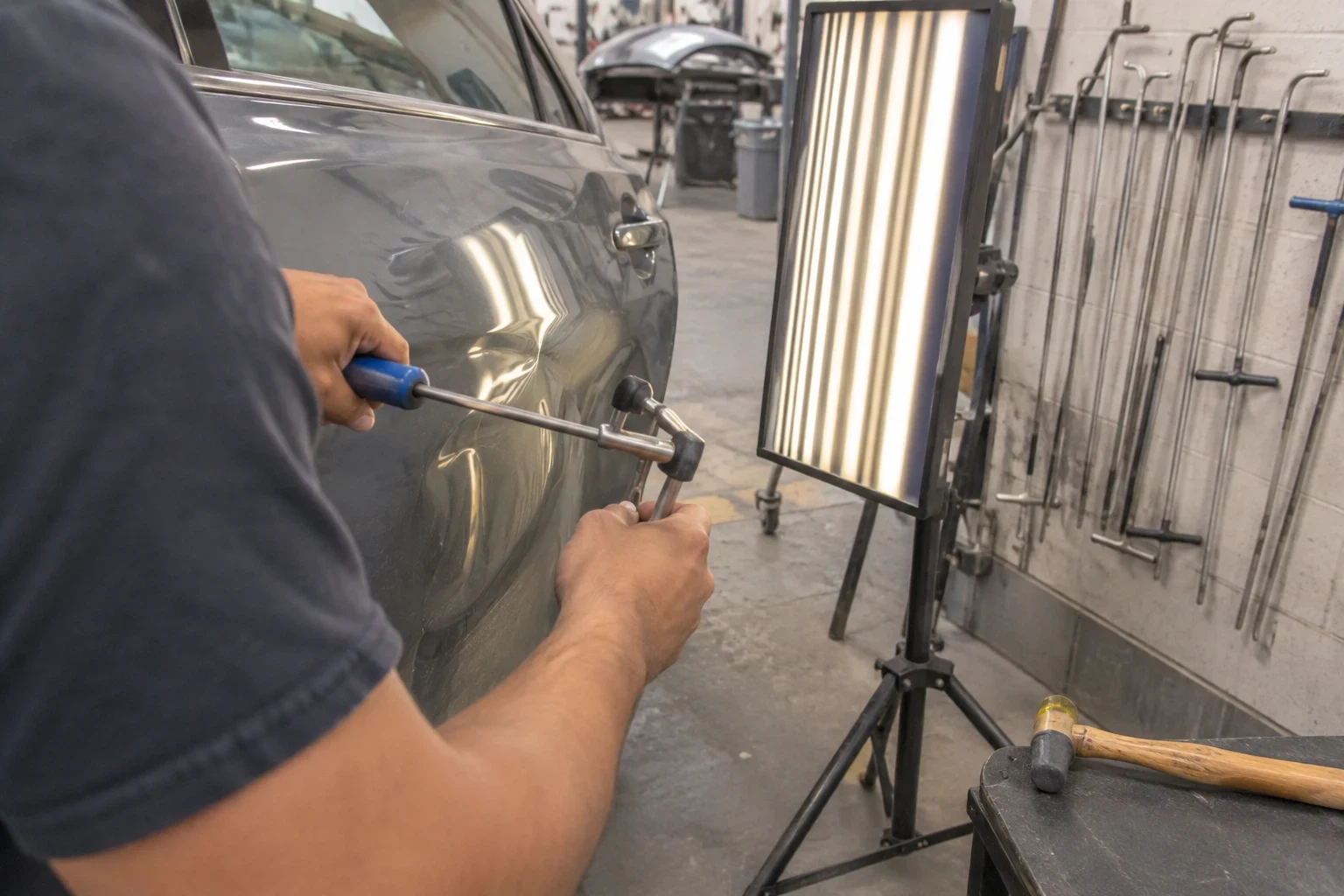
Dent repair covers two very different jobs. Paintless dent repair, usually called PDR, works the metal back into shape from behind with steel rods, or pulls it from the front with glue tabs, and leaves the factory paint untouched. It suits door dings, shopping cart hits and shallow dents where the paint has not cracked or stretched.
When the dent has a sharp crease, sits on a body line, or the paint has chipped, the panel needs conventional repair. We pull or hammer the metal close to shape, apply a thin skim of body filler, block-sand it level, then prime, paint and blend into the panels next to it. That second route takes longer and costs more, which is why we want to see your car before promising either one.
A dent that is only cosmetic today can turn into a paint repair later. Cracked paint at the edge of a dent lets moisture reach bare steel, and long Fresno summers bake and lift chipped clear coat faster than you might expect. Getting a small dent on the calendar early usually keeps it in the cheaper category.
What Our Dent Repair Includes
Inspection under a reflection board
We read the dent against a striped light board, which shows the true size and any low spots around it that are hard to see in daylight. This is how we decide between paintless and conventional repair.
Access to the back of the panel
For PDR we reach behind the dent through existing openings, or by removing a door trim panel, tail light or inner fender liner. Those parts are reinstalled with their original clips or new ones if the old clips break.
Glue pulling for closed areas
Roof rails, quarter panels and spots with bracing behind them often cannot be reached with a rod. There we bond pulling tabs to the paint, lift the dent in stages and release the glue with alcohol so the finish is not harmed.
Metal finishing and filler when needed
On creased or stretched metal we shrink and level the steel first, so the filler layer stays thin. Thick filler can crack and shrink over time, so we keep it to a skim coat.
Aluminum panel handling
Many newer hoods, fenders and truck beds are aluminum, which is less forgiving than steel and work-hardens as it moves. We use separate tools for aluminum to avoid contaminating it with steel particles that cause corrosion.
Refinish and blend
If paint is required, the panel is primed, color-matched and blended into the adjacent panels. Our Paint and Refinishing page explains that part of the work in more detail.
Signs a Dent Is Worth Fixing Soon
- Cracked or flaking paint at the edge
- Once the paint breaks, the steel underneath is exposed. Surface rust can start there and spread under the surrounding paint.
- A dent on a body line or panel edge
- Body lines are stiffened folds in the metal, and a dent across one pulls the panel out of shape around it. These rarely improve and are harder to repair the longer the metal stays stressed.
- A panel that pops in and out
- If you press near the dent and the panel flexes with a soft pop, called oil canning, the metal has been stretched. That usually needs shrinking, not just pushing out.
- A door or trunk that does not close right
- A dent near a hinge or latch can shift alignment. If a door needs an extra push or the gaps look uneven, the damage may go past the outer skin, and Collision Repair may be the better fit.
- Planning to sell or turn in a lease
- Dents lower trade-in offers and can add lease return charges. Fixing them on your own schedule beforehand gives you time to compare the cost against those deductions.
How a Dent Repair Visit Runs
- 1
A phone call first
You tell us where the dent is, roughly how big, and whether the paint is broken. We let you know what to expect and set a time for you to bring your car to the shop.
- 2
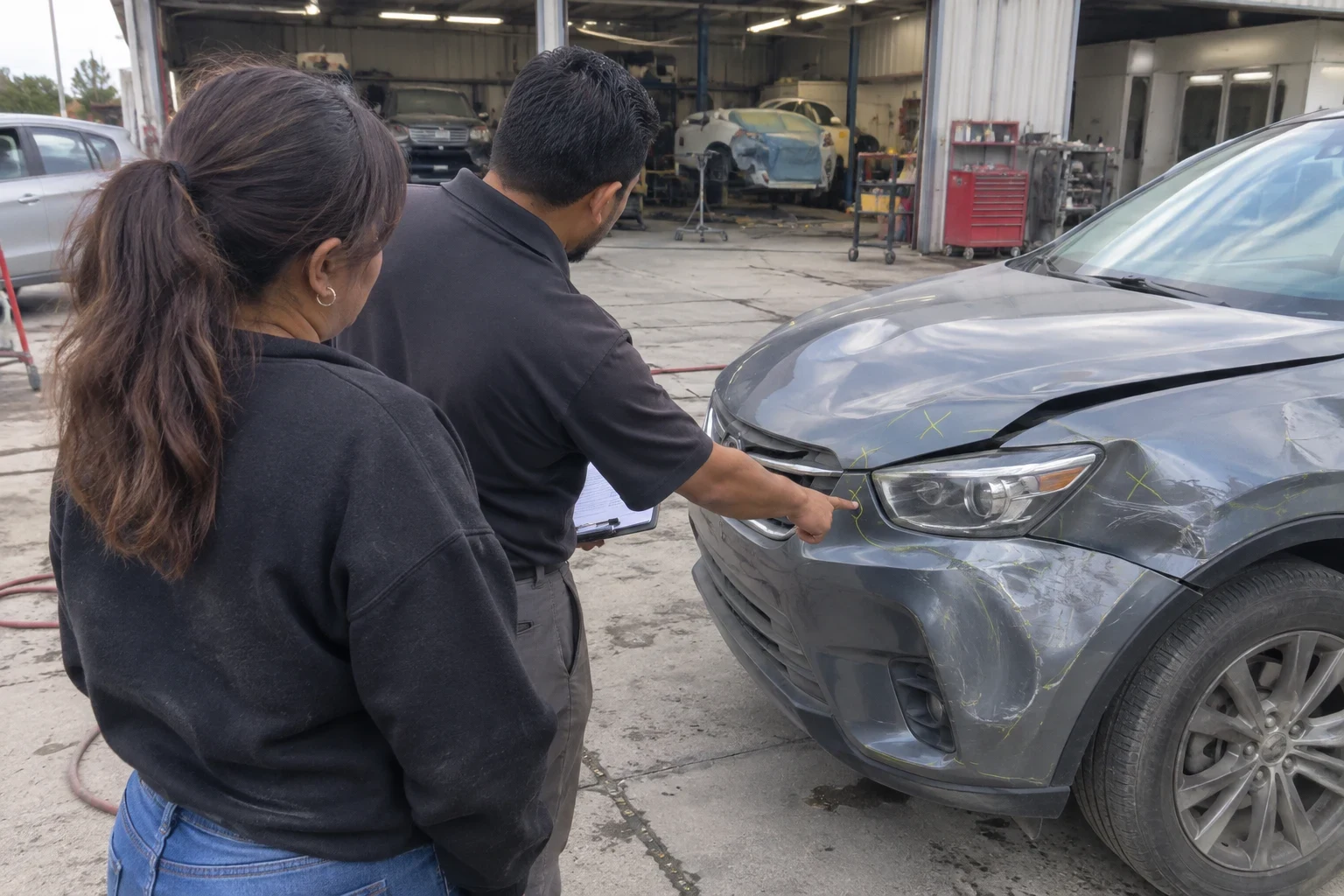
Inspection and estimate
We look at the dent under the light board, check behind the panel for access and bracing, and write up the estimate. You will know whether it is paintless or conventional repair, and why, before you agree to anything.
- 3
The repair
PDR jobs are often finished in a single visit, since there is no paint cure time. Conventional repairs need filler cure, primer, paint and clear coat, so we give you a realistic timeline when you book.
- 4
Final check with you
We recheck the panel under the light board and walk you around the car. Any trim or liners we removed are back in place before you drive away.
What Moves the Cost of Dent Repair
The single biggest factor is whether the paint survived. A dent that can be pushed out without paint costs far less than one that needs filler and refinish. We put each part of the work on the estimate so you can plan and budget for it.
- Size and depth
- A shallow round dent the size of a coin moves quickly. Deep or wide dents stretch more metal and take more passes to bring back level.
- Location on the panel
- Dents in open, flat areas are the simplest. Body lines, panel edges and spots behind bracing take more time and sometimes rule out PDR altogether.
- Panel material
- Aluminum panels take slower, more careful work than steel. They also hold creases more stubbornly.
- Paint condition
- Cracked paint means sanding, priming, painting and blending into neighboring panels. Blending is what makes the color match, and it adds labor and material.
- Parts removed for access
- Some dents only come out after a headliner, tail light or door trim is taken off. Removal and reinstallation time is included in the estimate.
Dent Repair Questions
- Can every dent be fixed without repainting?
- No. PDR needs paint that is still flexible and unbroken, and metal that has not been creased too sharply. If the paint has cracked or the dent sits on a tight body line, pushing it out will leave visible marks, so we recommend conventional repair instead. We tell you which applies after the inspection.
- Will the dent come back after paintless repair?
- A properly repaired dent does not spring back. The metal is worked until it holds its original shape. What can happen is a new dent in the same weak spot if the panel is hit again.
- How long will I be without my car?
- Most paintless repairs are done in a single visit. Repairs that need filler and paint take longer because each coat has to cure before the next. We give you a timeline with the estimate so you can plan around it.
- Should I go through insurance for a dent?
- For a small dent the repair may cost less than your deductible, so paying directly can make more sense. If the damage came from a collision or another driver, a claim may be worth it. Our Insurance Claims page covers how we work with the adjuster and what we document.
- Do you fix dents from hail or shopping carts?
- Yes. Hail usually leaves many shallow round dents with the paint intact, which suits PDR well. Cart and door dings are usually single small dents and among the quickest repairs we do.
Get That Dent on the Calendar
Tell us where the dent is and what the paint looks like. We will set up a time to inspect it at the shop and explain the repair and the estimate before any work begins.