ServicesInsurance Claims
Insurance Claim Repairs in Fresno
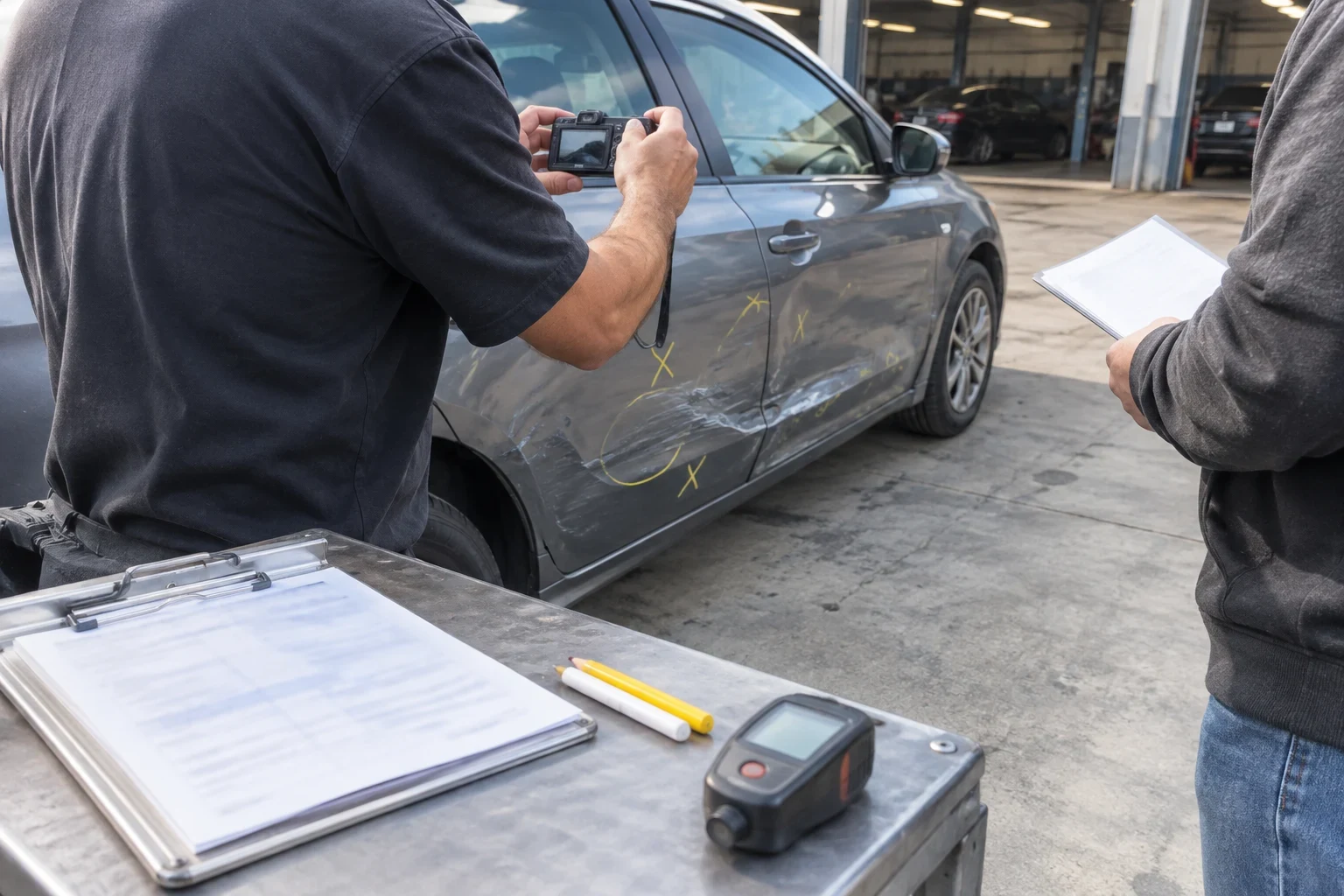
An insurance claim moves faster when the damage is documented well from the start. We photograph your car, write a line-item estimate the adjuster can match against their own, and tell you what your deductible and rental coverage mean for your schedule.
What we handle on an insurance claim repair
Most collision repairs in our shop are paid at least partly by insurance. The insurer's adjuster decides what the policy covers. Our job is to find all of the damage, write it up clearly and repair your vehicle correctly. We explain the process at each step, but we do not act as your adjuster or speak for your insurance company.
The first estimate on a claim is almost never the final number. An adjuster often writes it from photos or a quick walk-around, and hidden damage turns up once a bumper cover or door panel comes off: a cracked energy absorber, a bent reinforcement bar, a broken headlamp mounting tab. Planning for that ahead of time keeps the claim moving without surprise phone calls halfway through.
In California, you choose where your car is repaired. Your insurer may suggest a shop, but the decision is yours.
What our claim work includes
Damage photos and notes
We photograph every damaged panel, part and mounting point, including damage found after teardown. Those photos go to the adjuster with the estimate, so the reason for each line item is on record.
Line-item estimate
Each part, labor operation and material is listed separately: refinish hours, blend time on adjacent panels, clips and fasteners, corrosion protection. You can read it beside the insurer's estimate and see exactly where the two differ.
Supplement requests
When teardown reveals hidden damage, we document it and send a supplement to the insurer before that part of the repair goes ahead. You hear from us about what was found and how it affects the timeline.
Parts discussion
Insurers may write an estimate with aftermarket or recycled parts instead of new factory parts. We show you which parts are specified and explain the fit and finish differences, so you can talk to your insurer about it if it matters to you.
Sensor and system checks
Many newer vehicles have radar and camera sensors behind the bumper, grille or windshield. If the repair disturbs them, we include the needed checks and calibrations on the estimate so they are part of the claim from the start.
When it makes sense to call before you file
- Damage that looks small
- A scuffed bumper cover can hide a crushed foam absorber and bent brackets behind it. Knowing the real scope first helps you decide whether the repair is worth a claim against your deductible.
- You are deciding between claim and cash
- If the repair might land near your deductible, we can write the estimate first. You then decide whether to file or pay directly, with real numbers in hand.
- The insurer's estimate seems low
- Missing blend time, no teardown allowance, or parts that do not match your trim level are common reasons a first estimate comes in short. We can compare it line by line with what your car actually needs.
- Your car pulls or a gap looks wrong
- Uneven panel gaps, a door that drags or steering that pulls after an impact can point to structural damage. That may mean frame straightening, which needs to be on the claim before repairs start.
- A fog-season pileup or rear-end hit
- Winter tule fog brings plenty of chain-reaction collisions, and those claims often involve more than one insurer. Clear photos and a detailed estimate make it easier for each insurer to see which damage is theirs.
How a claim repair runs at our shop
- 1
Phone call and claim details
You call us with your claim number if you have one, the insurer's name and a description of the damage. We tell you what to bring and how long we need your car for the initial inspection.
- 2
Inspection and estimate
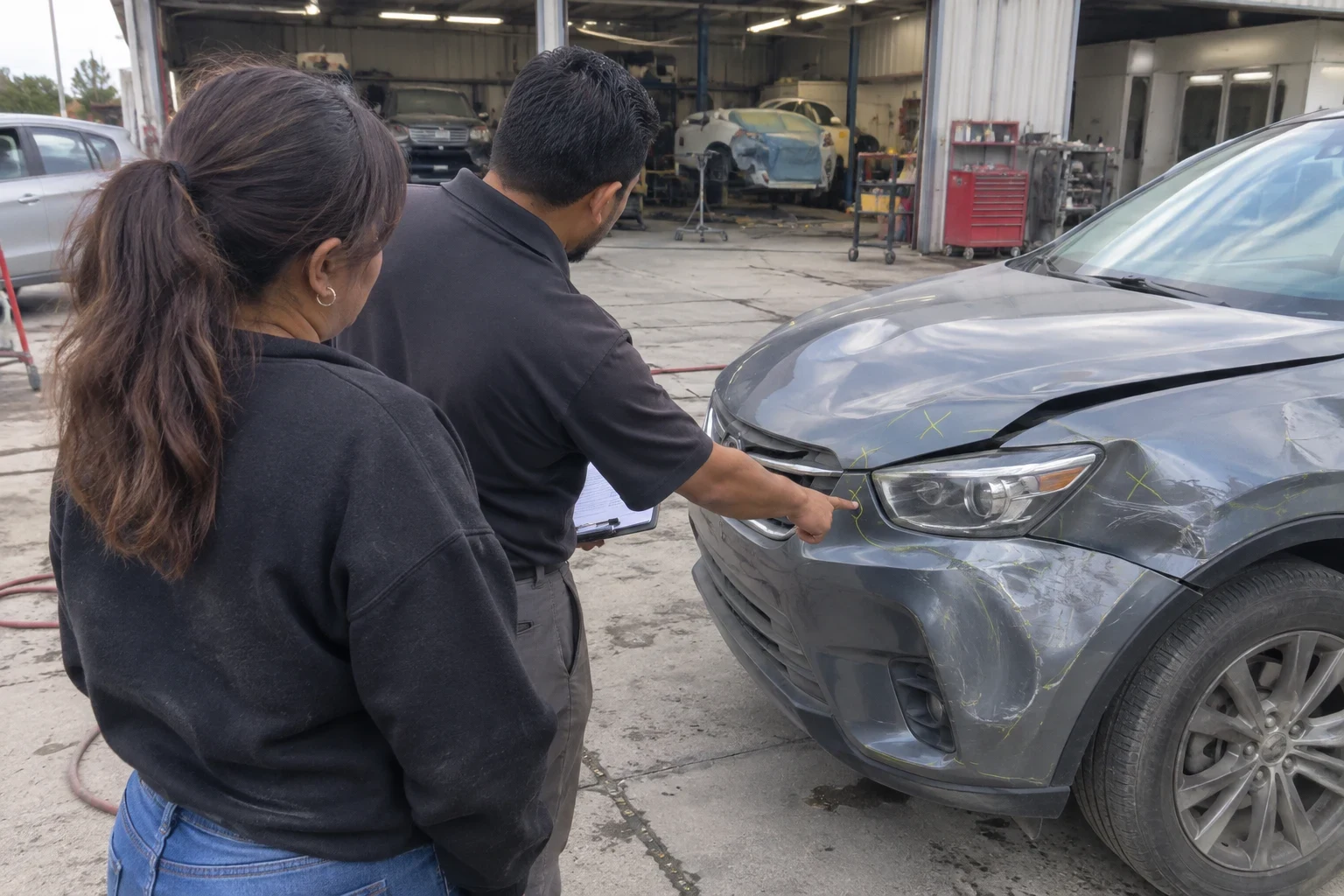
We inspect your vehicle, photograph the damage and write the line-item estimate. If the adjuster has already written one, we compare the two and note the differences.
- 3
Approval and parts ordering
Once the insurer approves the estimate, we order parts and schedule the repair. This is the point to set up a rental if your policy covers one, since parts availability drives most of the timeline.
- 4
Teardown and supplements
We disassemble the damaged area, document anything hidden and send supplements as needed. Work continues on approved items while the insurer reviews the additions.
- 5
Repair, final check and pickup
After body work, paint and refinishing, and any calibrations, we check panel gaps, lights and sensor function. We walk you through what was done and how your deductible is handled at pickup.
What affects your out-of-pocket cost and timeline
On a covered claim, the insurer pays the approved repair cost minus your deductible. What you actually spend depends on your policy and on how complete the estimate is. These are the factors we explain before work starts.
- Your deductible
- This is your share on most collision claims. If someone else's insurer accepts fault, the deductible may not apply, but that is decided between the insurers.
- Hidden damage found at teardown
- Supplements add to the claim total and can add days while the insurer reviews them. A thorough first inspection reduces how often this happens.
- Parts type and availability
- Factory parts, aftermarket parts and recycled parts differ in cost and lead time. If you want different parts than the policy pays for, you may owe the difference.
- Rental coverage limits
- Many policies cap rental days or daily rates. Matching the repair schedule to parts arrival helps you stay inside those limits.
- Upgrades or unrelated damage
- Old dents, prior scratches or extra work you want done at the same time are not part of the claim. We list them separately so the billing stays clear.
Insurance claim questions
- Do I have to use the shop my insurance company recommends?
- No. In California you have the right to choose the shop that repairs your car. Your insurer may suggest a shop from its own list, but you can bring your vehicle to us and we will work with your adjuster.
- Should I file a claim before or after getting an estimate?
- Either works. If the damage looks minor, getting our estimate first helps you decide whether it is worth filing against your deductible. If the damage is clearly significant or another driver was involved, it usually makes sense to report the claim right away.
- What happens if you find more damage after the adjuster's estimate?
- We photograph it, write it up and send a supplement to your insurer. The adjuster reviews and approves it before we repair those items. We let you know if it changes when your car will be ready.
- Will my insurer pay for factory parts?
- That depends on your policy and your vehicle's age. Some policies specify aftermarket or recycled parts. We show you which parts are on the approved estimate so you can raise it with your insurer if you want factory parts instead.
- When do I pay my deductible?
- You pay your deductible to us when you pick up your car, and the insurer pays the rest of the approved repair cost. If another driver's insurer accepted fault, there may be no deductible to pay.
Start your claim repair with a clear plan
Have your claim number and insurer's name ready if you have them. We will explain what happens next, from inspection to pickup.