ServicesFrame Straightening
Frame Straightening in Fresno
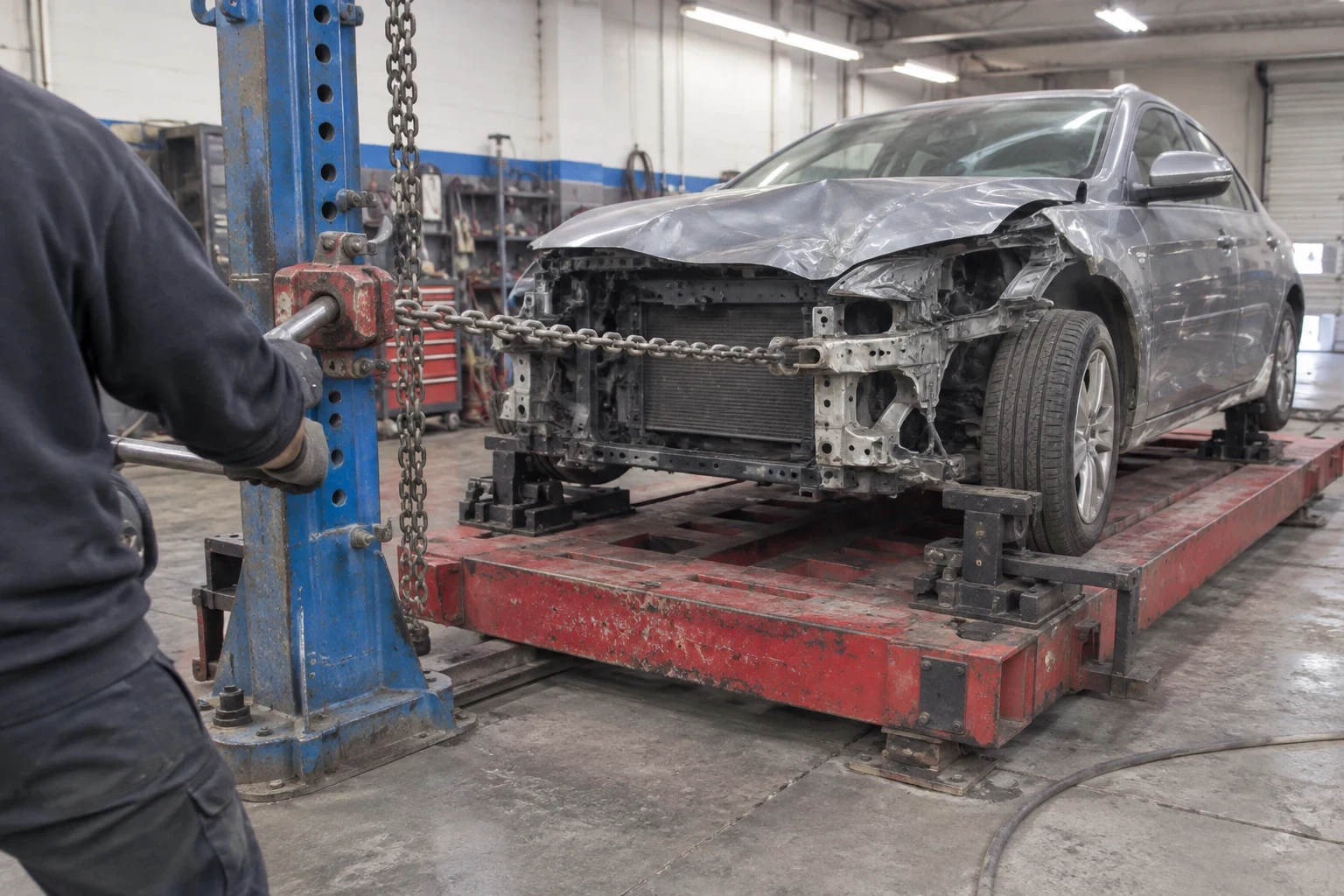
When a hit moves the structure of your car, new panels and paint will not fix it. We measure the unibody against factory dimensions, pull it back on a frame bench and give you a written plan for the repair before work starts.
What frame straightening fixes
Most cars and small SUVs built in the last few decades use a unibody: the floor pan, rails, aprons and pillars are welded into one shell that carries the load. Pickups and many larger SUVs still ride on a separate ladder frame. Either way, a collision can shift that structure a few millimeters, and a few millimeters is enough to throw off panel gaps, suspension geometry and how crash energy moves through the car next time.
Frame straightening means finding exactly where the structure moved, then using controlled pulls to bring each measuring point back to the manufacturer's published dimensions. Parts that are kinked, cracked or designed to be replaced after a crash are replaced instead of pulled. The goal is a car that sits, steers and protects the way it was engineered to.
We would rather you know about structural damage early. A measurement after a moderate hit lets you plan the repair, line up your insurance claim and budget for parts before a misaligned rail starts chewing through tires or a door stops sealing.
What the work includes
- Electronic measurement
- We check the car's reference points against factory data and print the readings. You see which points are out, in which direction and by how much.
- Bench anchoring and pulls
- The car is clamped to a frame bench at its pinch welds or frame mounts so it cannot move as a unit. Pulls are set at angles that reverse the path of the impact, applied in stages with measurements between each one.
- Replacing parts that should not be pulled
- Some high-strength steel rails and crush zones are meant to be replaced, not reshaped, because heat and repeated bending weaken them. We follow the manufacturer's repair procedures on where to section and how to weld.
- Suspension and mounting points
- Strut towers, control arm mounts and the subframe are checked, since a car can measure straight at the rails and still be off where the wheels attach.
- Final measurement and alignment
- After the pulls and any part replacement, the car is measured again and the readings are kept with the repair file. A wheel alignment follows so tire wear matches the corrected geometry.
Signs your car's structure has shifted
Uneven gaps around doors or the hood
If a gap is wide at the top and tight at the bottom, the opening itself has moved. Adjusting hinges only hides it.
The car pulls after an alignment
An alignment can only correct within the adjustment range. If the shop says a wheel cannot be brought into spec, a mounting point may have shifted.
Fast or one-sided tire wear
Wear on the inner or outer edge of one tire, especially after a curb strike or a hit near a wheel, often points to bent suspension mounts or rails.
Doors that bind, leak or whistle
A door that has to be slammed, lets in dust or picks up wind noise at freeway speed may be sitting in a slightly twisted opening.
Wrinkles under the car or in the trunk floor
Creases in the floor pan, spare tire well or inner rails are a clear sign energy traveled into the structure. They are easy to miss until the car is on a lift.
What moves the cost of frame straightening
Two cars with similar dents on the outside can need very different structural work underneath. That is why we measure before we give you a number for the repair. Once the readings are in, we can tell you what is driving the cost and help you plan around it.
How far the structure moved
A single rail pushed back a few millimeters may need one or two pulls. Damage that runs across the car or into the floor takes more setup, more pulls and more measuring time.
Pull or replace
When the manufacturer calls for replacing a rail section, an apron or a pillar, parts and welding time add to the bill. Ultra-high-strength steel is usually in this group.
Frame type and vehicle
Unibody cars, body-on-frame trucks and aluminum-intensive vehicles each need different anchoring, tools and procedures.
Related systems
Suspension parts bent in the same hit, sensor calibration and the alignment afterward are part of getting the car right and show up on the estimate.
How a frame repair runs at our shop
- 1
Inspection and teardown
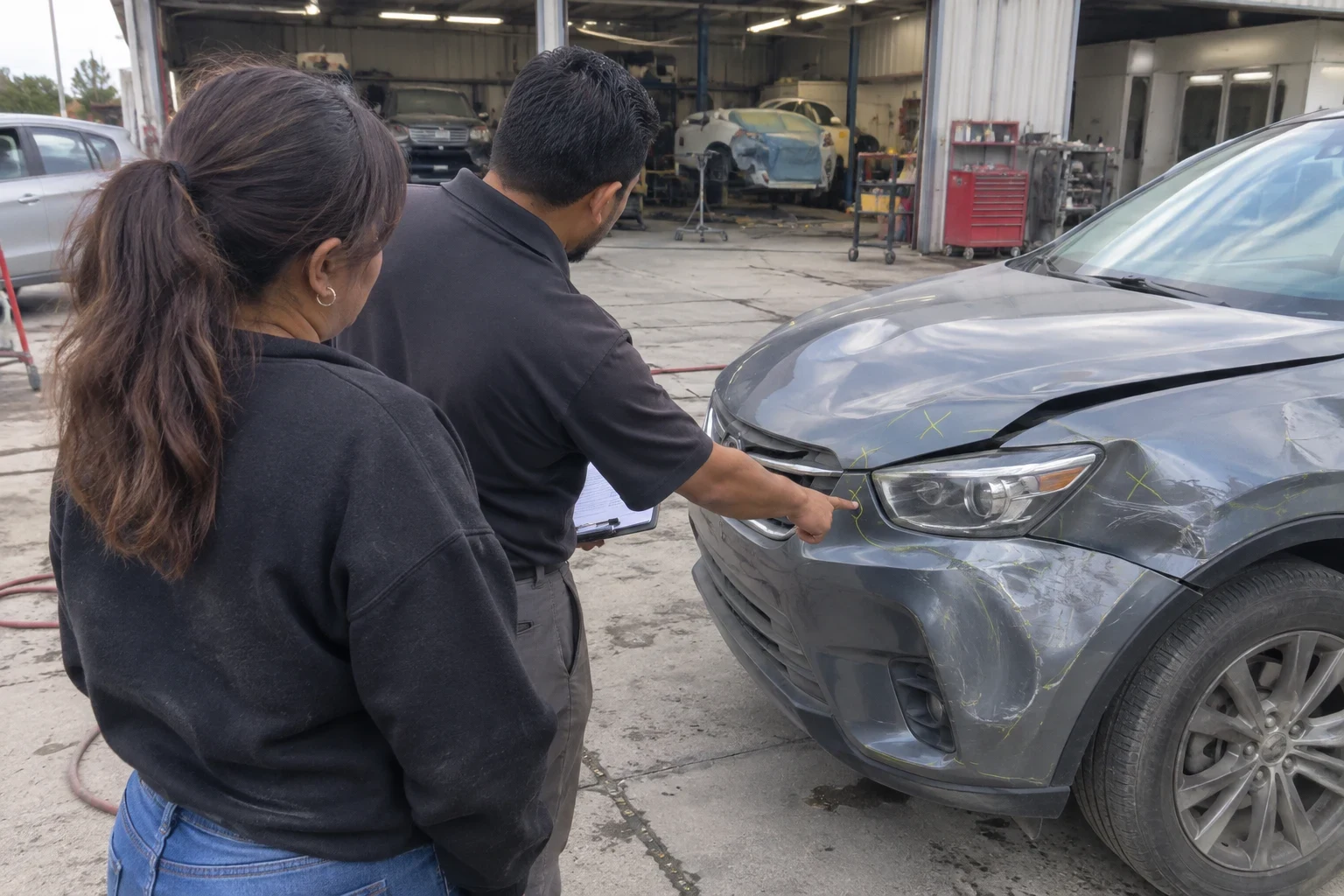
You bring the car in and we look it over on a lift. Damaged bumper covers and trim often come off so we can see the rails and reinforcements behind them.
- 2
Measurement and written plan
We measure the structure and write up which pulls, which replacement parts and which related repairs the car needs. Parts with long lead times are ordered right away so the car does not sit on the bench waiting.
- 3
Pulling and replacement
The car goes on the bench, gets anchored and is pulled in stages. Anything that needs replacing is sectioned and welded to the manufacturer's procedure, then corrosion protection is applied to bare metal.
- 4
Reassembly and verification
Panels go back on, gaps are set and the car is measured a final time. If it carries camera or radar sensors, the plan accounts for calibration after the structure is corrected.
- 5
Alignment and handoff
We align the wheels, road test the car and walk you through the before and after readings when you pick it up.
Frame straightening questions
Is a car ever the same after frame damage?
When the structure is measured, pulled to factory dimensions and any parts meant for replacement are replaced, the car should drive and fit the way it did before. The measurement printouts are how you know it is back in spec, not just how it looks. Damage that is too extensive to repair correctly is something we tell you about plainly.
Can I keep driving my car until I schedule the repair?
It depends on what moved. A slightly shifted rail with no steering or suspension symptoms may be drivable for a short time, while a bent suspension mount or a pulling car is not something to put off. A measurement tells you which situation you are in so you can plan safely.
How long does frame straightening take?
The bench work itself is often a day or two. The full repair takes longer because panels, paint and sometimes parts on order are involved. We give you a realistic schedule once the car is measured and parts are confirmed.
Will insurance pay for frame straightening?
If the damage came from a covered collision, structural repair is normally part of the claim. Our Insurance Claims page explains how we document the damage and work with your adjuster, and the measurement printouts help support the estimate.
Does frame damage mean my car is totaled?
Not on its own. A car is usually declared a total loss when the repair cost approaches its value, and many frame repairs come in well below that. The written plan gives you and your insurer real numbers to decide with.
Get the structure measured before you decide
Bring your car in and we will show you exactly where it moved and what it takes to bring it back. Then you can plan the repair on your schedule.