ServicesPaint and Refinishing
Paint and Refinishing in Fresno
We repaint panels, blend color into the surrounding body and lay down fresh clear coat so the repair matches the rest of your car. Catching peeling clear or a deep scratch early keeps the job smaller and lets you budget for it instead of reacting to rust.
What paint and refinishing actually fixes
Factory paint is a layered system: e-coat and primer for corrosion protection, a thin basecoat that carries the color, and a clear coat on top that blocks UV and takes the abrasion. Most paint problems start in that top layer. Once the clear thins out or lifts, the basecoat underneath chalks and fades, and a chip that reaches bare steel will start to rust.
Refinishing means taking the damaged layers back to a sound surface, rebuilding them in the right order and blending the new color so the panel disappears next to its neighbors. It is the right call for oxidized roofs and hoods, clear coat that is flaking, key scratches, and the paint stage of collision repair, dent repair or bumper repair.
Paint damage rarely becomes urgent overnight, which is good news for your budget. Under the long, hard sun of a Fresno summer, though, a hood that is starting to haze can go to bare primer within a season or two. Looking at it while it is still a clear coat problem usually means fewer panels and less prep.
What the paint work includes
- Surface inspection and paint depth
- We check each affected panel for clear coat failure, cracking and previous refinish work. A paint thickness gauge tells us whether there is enough clear left to polish or whether the panel needs to be refinished.
- Prep down to a sound layer
- Failed clear and chalky basecoat are sanded off, and any bare metal is treated and primed. Paint applied over a weak layer will lift again, so this step decides how long the repair lasts.
- Color matching to your car
- We start from your vehicle's paint code, then check spray-out cards against the actual car in daylight-balanced light. Metallic and pearl colors shift with spray angle, so we adjust the mix until it reads correctly on the panel.
- Blending into adjacent panels
- Rather than stopping the color at a panel edge, we fade it into the neighboring panel so small differences from aging are not visible. That is why a door repair sometimes includes paint on the fender.
- Clear coat and finishing
- New clear coat goes over the whole refinished area, then cures before we wet-sand and polish out any texture or dust nibs so the gloss matches the original finish.
Signs your paint needs attention
Hazy or chalky roof and hood
The horizontal panels take the most sun. A dull, white cast that does not polish out means the clear coat is breaking down.
Clear coat peeling at the edges
Flaking that looks like sunburned skin will keep spreading once it starts. The exposed basecoat fades quickly and has little protection of its own.
Scratches that catch a fingernail
If your nail drags in the scratch, it has gone through the clear and possibly into primer or metal. Polishing will not remove it.
Rust bubbles under the paint
Small blisters near a chip or seam mean moisture has reached the steel. Caught early, it is a spot repair; left alone, it can mean replacing metal.
Etched spots from sap or droppings
Bird droppings and tree sap are acidic and can etch through clear coat when they bake on a hot panel. Dull, ringed spots that stay after washing are a sign of etching.
What moves the cost of paint work
Paint pricing comes down to how many panels are involved and how much prep each one needs. Two cars with the same scratch can price differently because of color and the condition underneath. We break it out panel by panel so you can see where the money goes and plan around it.
Number of panels and blending
Each refinished panel adds material and labor, and blending into neighboring panels adds more. Blending is what makes a single-panel repair invisible, so it is often worth including.
Depth of the damage
Damage that stops at the clear coat needs far less prep than damage down to bare metal or rust. This is the biggest reason early repairs cost less.
Color type
Solid colors are the simplest. Metallics, pearls and three-stage colors take more material, more coats and more time to match correctly.
Trim removal and previous repairs
Panels with lots of moldings, sensors or emblems take longer to strip and reassemble. Old refinish work that is failing has to be removed before we can build a new finish on top.
How a paint job runs at our shop
- 1
Look it over and talk it through
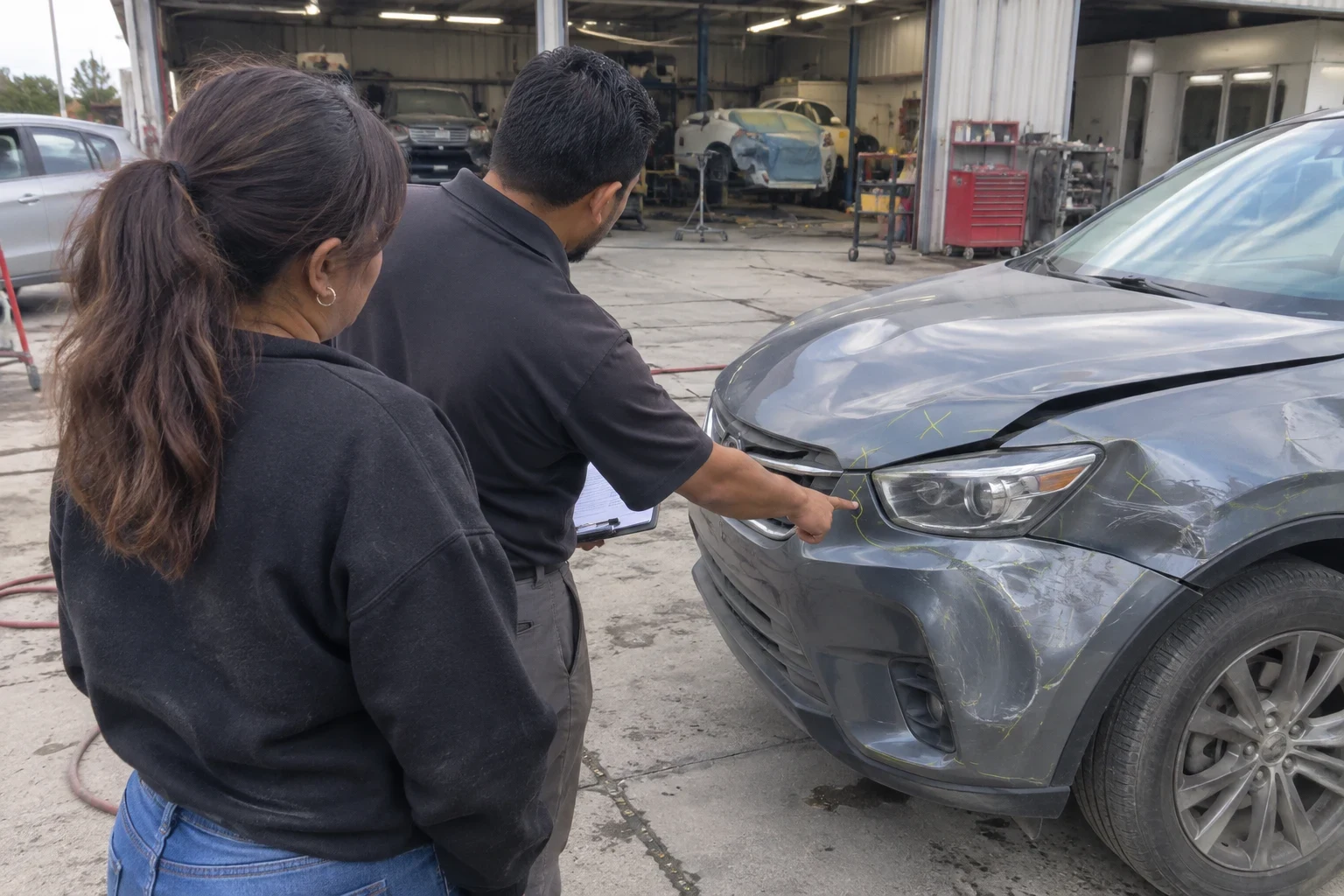
You bring your car in and we walk around it with you, noting which panels need refinishing and which can be polished. We explain what is causing the damage so you can decide what to do now and what can wait.
- 2
Written estimate by panel
The estimate lists each panel, the prep it needs and whether blending is included. If you want to phase the work, we can show what to handle first, usually anything already down to bare metal.
- 3
Prep, mask and prime
We disassemble trim, handles and emblems where needed instead of taping around them, then sand, prime and block the surface flat. The rest of your vehicle is masked off to keep overspray where it belongs.
- 4
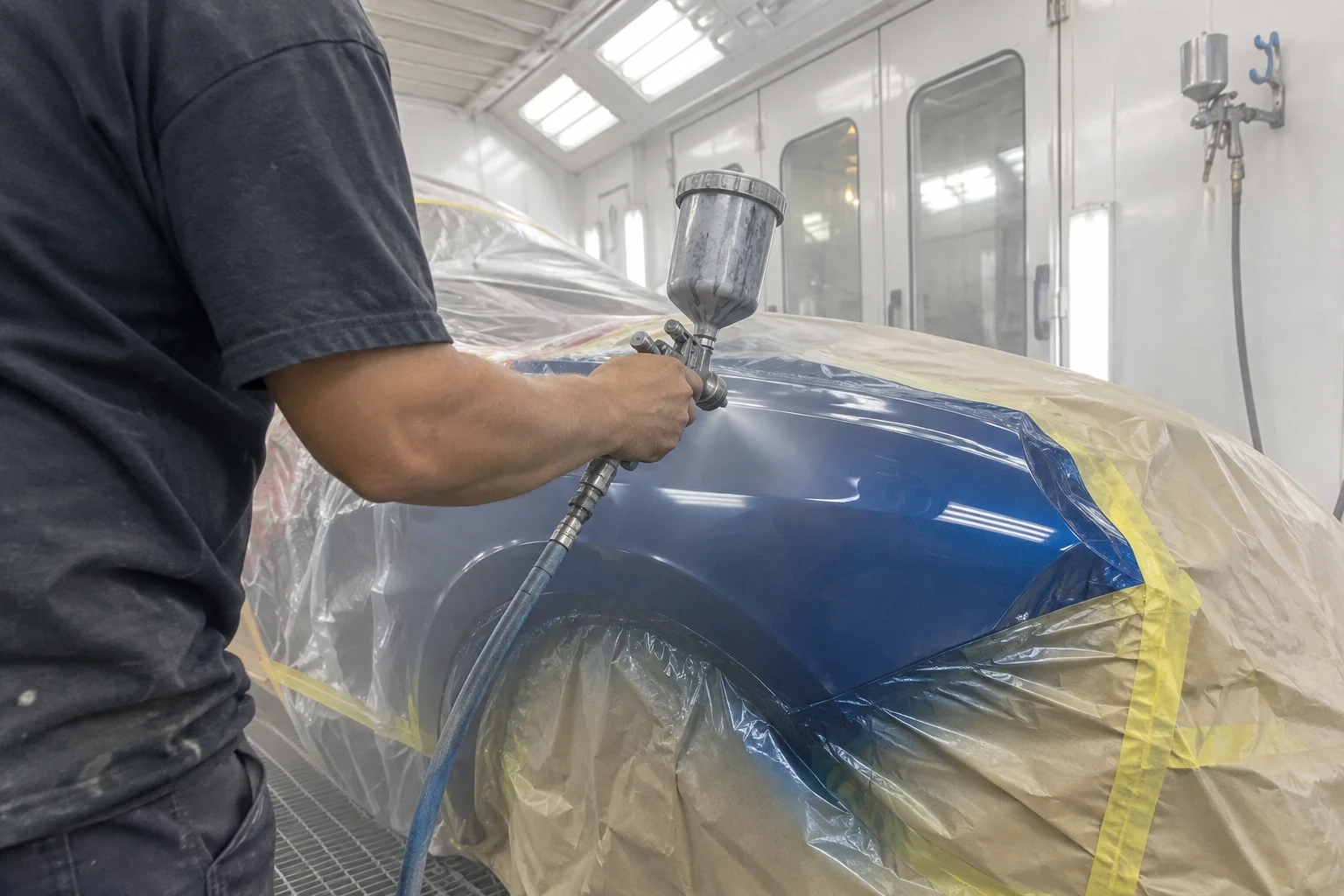
Spray, cure and polish
Basecoat and clear are applied in the booth and cured before handling. Then we color sand and polish, reinstall the parts and check the match outdoors before you pick it up.
Paint and refinishing questions
Can you paint just one panel without it looking different?
Usually, yes. We match from your paint code and spray-out cards, then blend the color into the panel next to it so slight differences from sun aging do not show. On older or heavily faded cars, we may suggest polishing the surrounding panels too so the gloss levels match.
Can faded paint be polished instead of repainted?
Sometimes. If the haze is only in the top of the clear coat and a gauge shows enough thickness left, polishing can bring it back. Once the clear is peeling or gone, the panel needs to be refinished, and we will tell you which case you have.
How long will my car be at the shop?
It depends on the number of panels, the color and how much prep is involved. A single panel takes much less time than a hood, roof and trunk together. We give you a timeline with the estimate so you can arrange a ride or a rental ahead of time.
Should I fix a small chip now or wait until I have more damage?
Fix chips that reach bare metal soon, because rust spreads under the paint and turns a small spot into a bigger panel repair. Cosmetic issues that are only in the clear coat can often wait and be grouped with other work to fit your budget.
Will the new paint need special care?
Fresh clear coat needs some time to finish curing. We will tell you how long to avoid automatic car washes and waxing, and hand washing in the meantime is fine.
Get ahead of fading and peeling paint
Tell us what you are seeing on your car and we will explain whether it is a polish, a spot refinish or a larger job. Then you can plan the repair on your schedule.